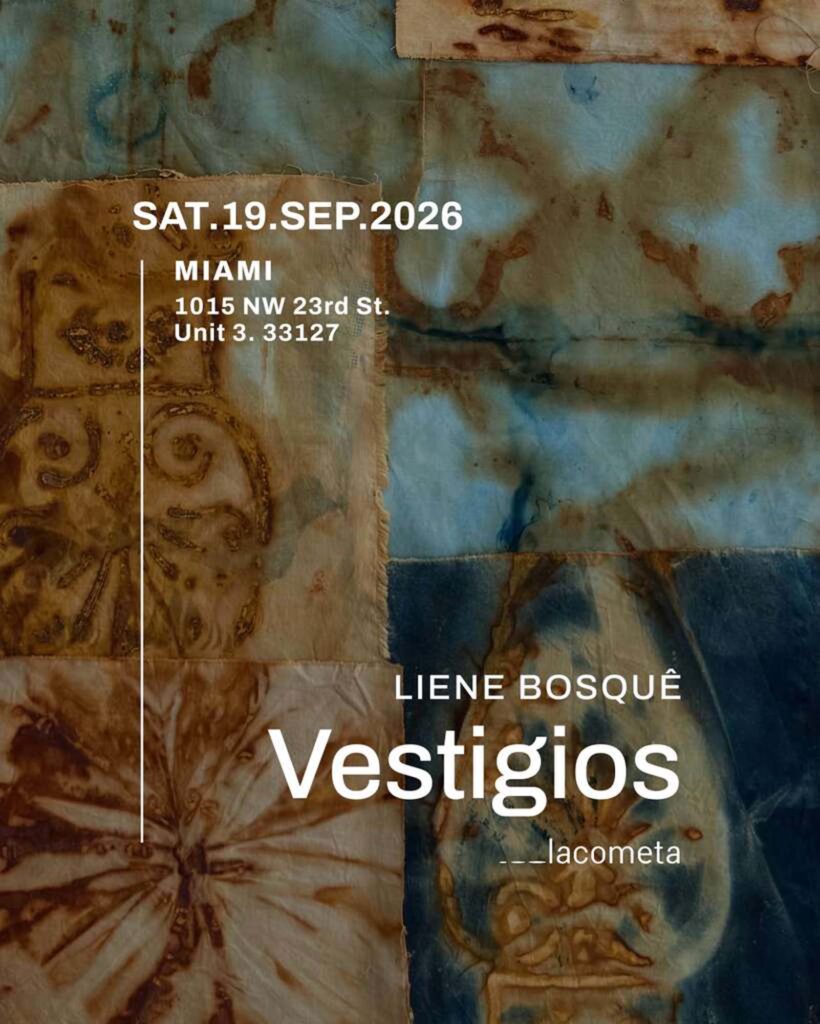
La Cometa is a project-based space designed to facilitate relationships between the viewer, the works of art, and the artists. Galería La Cometa was founded over 35 years ago to contribute to the development of the local art scene. Since then, the gallery has been an exhibition space whose mission focuses on the representation, promotion and dissemination of mainly Latin American artists, becoming one of the most influential artistic platforms in the region. Today, La Cometa has four offices in three countries: Colombia (Bogotá and Medellín), Spain (Madrid) and the USA (Miami). La Cometa is a project-based space designed to facilitate relationships between the viewer, the works of art, and the artists, through various expressions of contemporary art. In addition, the gallery’s program seeks to incorporate Latin American Modern Art references, which provide a fundamental context for contemporary artistic creation. The team at Galería La Cometa is proud to present these important projects so that we may align with our mission and exhibit the most influential Ibero-American Modern and Contemporary Art to the world.